
NEWS
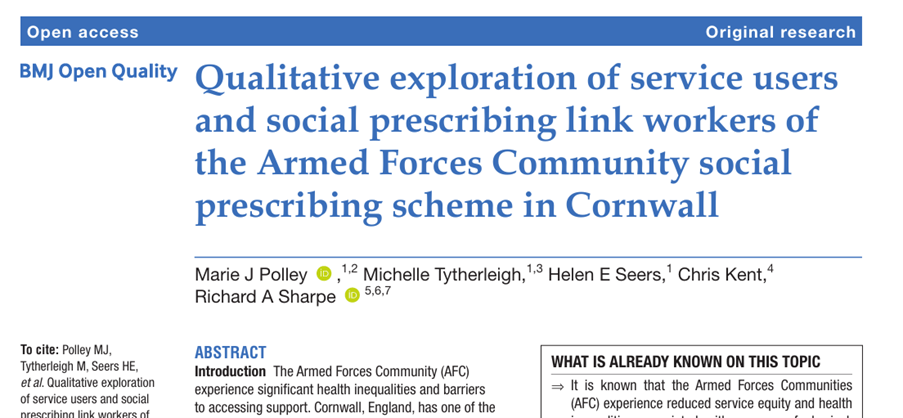
New research published: What makes social prescribing work for the Armed Forces Community?
Our latest qualitative study explores the experiences of veterans and social prescribing link workers involved in the Armed Forces Community social prescribing scheme in Cornwall. The research was carried out by Meaningful Measures Ltd and commissioned by Cornwall Council as part of an independent evaluation of the service.
Key messages from the research
🧭 Transition matters. Many veterans face significant challenges moving from a military to a civilian identity, often alongside mental health needs, social isolation, housing or financial difficulties.
🤝 Trust is foundational. A key finding was the importance of link workers who are themselves veterans. Shared experience reduced barriers, built trust quickly, and helped people engage with support without needing to explain military culture or experiences.
⭐ Mattering matters. Participants described how having someone who understood their experiences and actively supported them helped restore a sense that they mattered to others and to their community. This sense of being valued and connected appeared to play an important role in improving wellbeing and optimism for the future.
🔧 Small practical changes can have profound impacts. Participants described improvements in wellbeing, stronger social connections, and a renewed sense of hope and optimism.
Why this is important?
The Armed Forces Community continues to experience health inequalities and barriers to accessing support. This study shows that designing services around identity, lived experience, trust, and a sense of mattering can significantly improve engagement and outcomes.
The findings also highlight a broader lesson for health and care systems: social prescribing is most effective when it reflects and understands the communities it serves. Representation and cultural understanding are not optional extras — they are core components of effective support.
This is the first study to document these experiences in this context and offers important insights for future research, commissioning, and policy development.
Stay Informed
When you subscribe to the blog, we will send you an e-mail when there are new updates on the site so you wouldn't miss them.


Comments